
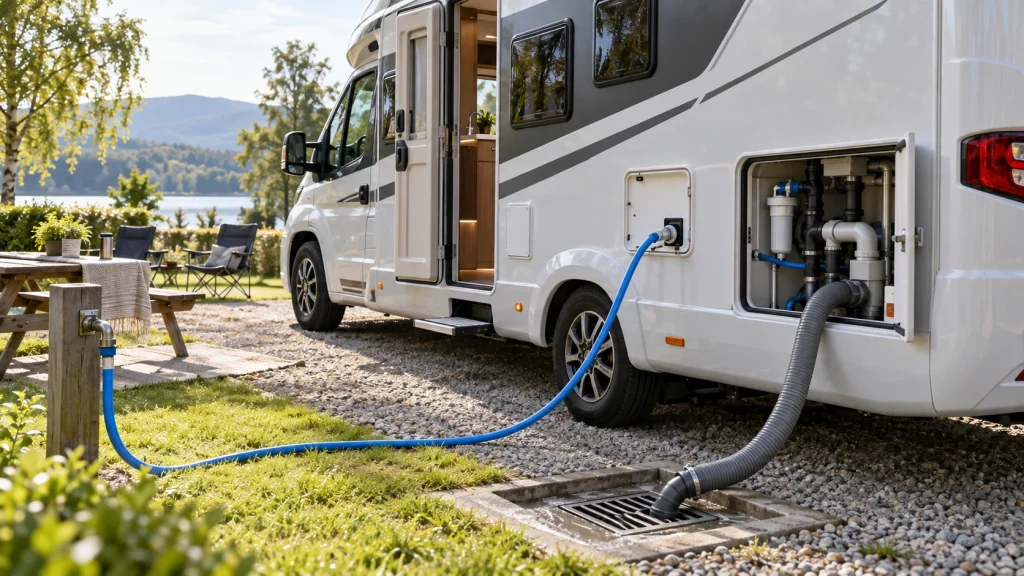
A motorhome’s water system is easy to overlook until the fresh water runs low or the greywater tank fills up. During a stay, both levels matter: every litre used for washing or cooking eventually needs somewhere to go. A simple routine for managing fresh water and greywater can prevent an inconvenient trip to a service point halfway through dinner.
Know what each tank holds
The fresh water tank supplies the taps, shower and, in some motorhomes, the toilet flush. Greywater is the used water collected from sinks and showers. It may contain soap, food residue and grease, so it needs proper disposal even though it is different from toilet waste. Toilet waste has its own cassette or tank and follows a separate emptying procedure.
Check how your motorhome shows tank levels before settling in. Some vehicles have gauges on a control panel; others require a visual check. Treat readings as a guide, particularly if the vehicle is parked on uneven ground. Knowing where the fill point, greywater outlet and drain valve are located also makes servicing less hurried.
Plan around both tank levels
It is tempting to focus only on how much fresh water remains. Yet a nearly full greywater tank can limit water use even when plenty of clean water is available. Check both levels when you arrive and again before activities that use more water, such as several showers or a substantial round of washing up.
For example, a family preparing dinner may have enough fresh water for cooking and dishes, but little room left in the greywater tank. Emptying the tank at an appropriate disposal point before starting is easier than discovering the problem after the sink is full. If a service point is some distance away, factor that trip into your daily plans.
Tank capacity, the number of people travelling and how they use water all affect how often you need to refill or empty. A short stay with access to other washing facilities may demand less of the onboard system than a longer stay relying on the motorhome shower. Learn your own pattern over the first day rather than assuming the tank will last a set number of nights.
Fill the fresh water tank carefully
Use a drinking water supply intended for filling fresh water tanks, and check any instructions displayed at the site. A clean hose kept for fresh water helps avoid mixing it up with equipment used for waste. Keep the hose end off the ground and away from the filler opening until you are ready to use it.
If the motorhome has been stored for a while, follow the manufacturer’s guidance for cleaning and flushing the tank and pipework before relying on the water for drinking. Water that looks clear is not, by itself, proof that a neglected system is clean. If you are unsure about the water supply or the condition of your tank, use a suitable separate supply for drinking until you can check it.
Fill at a pace that lets you watch the level or overflow, then close the filler cap securely. A full tank adds weight to the vehicle, so consider how much water you need before driving on. During a stay, filling when convenient may be simpler than carrying the maximum amount from place to place.
Make the water last without making life difficult
Small habits have a greater effect than trying to avoid every normal use of water. Turn off the tap while brushing teeth or scrubbing dishes. Collect dishes before washing them, wipe oily pans with kitchen paper first, and use a bowl or plugged sink when that suits the job. These steps also reduce the food and grease entering the greywater tank.
For showers, a brief rinse, water off while soaping, and a final rinse can substantially reduce demand. If shared sanitary facilities are available and you prefer to use them, that also leaves more capacity in both tanks. The right approach depends on your comfort, the facilities at your stop and how soon you can service the vehicle.
Avoid tipping cooking oil or large scraps down the sink. They can cause smells and make the waste system harder to clean. A sink strainer is useful for catching food particles before they enter the plumbing.
Empty greywater at the right place
Use a designated greywater disposal point and follow its signs. Do not assume that an ordinary surface drain, roadside gully or patch of ground is suitable. Disposal arrangements vary between stops, and the marked facility is the reliable place to start. Keep toilet waste separate and use the facility intended for it.
Before moving the motorhome into position, confirm which side the outlet is on and how the drain needs to line up. Open the valve only when the outlet is over the appropriate drain or connected as instructed. Let the tank empty, close the valve fully, and check for drips before driving away. If you use a removable hose or container, handle and store it separately from fresh water equipment.
A greywater tank that has sat partly full may develop an unpleasant smell. Emptying it regularly helps, particularly after cooking and washing up. If odours persist, check the sink traps, drains and tank maintenance instructions for your vehicle rather than adding an unsuitable cleaning product.
For more detailed information on this topic, read our guide on How Campsite Sanitary Facilities Manage Hot Water Demand.
Leave room for the next stage of the trip
Before departure, check the fresh water and greywater levels together. Decide whether to refill, empty or do both based on your next stop and the facilities you expect to use. A few minutes at a suitable service point can spare you from managing a full waste tank or an empty tap later in the journey.
The most useful habit is simple: know where the water comes from, notice where it goes, and service the tanks before either reaches its limit. That leaves you free to use the motorhome comfortably throughout the stay.