
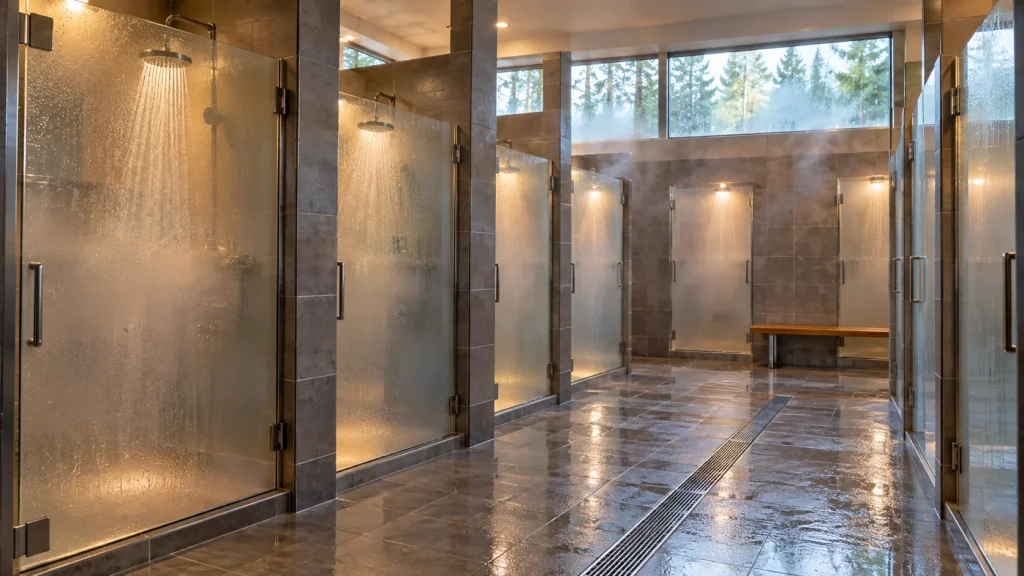
A hot shower can feel essential at the end of a day outdoors, yet many guests may want one at roughly the same time. Campsite sanitary facilities manage hot water demand by balancing how much water is heated, how quickly it can be replenished, and how many showers are running at once. Understanding that balance helps explain why water temperature or pressure can vary during a busy period—and what guests can do when it does.
Why shower demand comes in waves
Hot water use at a campsite is rarely steady. Mornings can bring a rush before guests leave for the day, while evenings often gather people returning from activities, cooking, or putting children to bed. A quieter shower block can become busy within minutes when several groups follow the same routine.
The important measure is simultaneous use. Ten showers spread across an afternoon place a different demand on a system than ten showers started within a short interval. Each shower draws heated water while the system works to replace it. Washbasins and other hot water outlets may add to the demand, depending on how the facilities are supplied.
The layout of the sanitary area matters, too. A campsite with more than one sanitary building can give guests several places to wash, but separate buildings do not automatically mean separate hot water supplies. The way each building is connected determines whether use in one area affects another. Guests usually cannot see that arrangement, so the most useful guide is the information provided on site and their experience at different times of day.
What happens when several showers run together
A hot water system has a limit to how much it can deliver at a comfortable temperature at one time. Some systems heat water and keep a reserve ready; others heat it as water is drawn, or use a combination of approaches. The details differ between campsites, but the practical challenge is similar: demand can briefly exceed the rate at which hot water is available.
When that happens, a shower may take longer to warm up, become less consistently warm, or offer a different flow than it did during a quiet period. Those symptoms do not, by themselves, reveal the cause. Water pressure, temperature controls, and equipment condition can also affect what a guest feels at the showerhead.
Consider a family arriving back from the beach just as many other guests return for the evening. If everyone heads straight to the showers, the shared demand rises sharply. Spacing their showers around dinner may make the visit more comfortable and leave less time spent waiting, though it cannot guarantee a particular temperature.
How campsites can handle peak periods
Managing demand involves both facility planning and day-to-day operation. Operators may consider the number of showers, expected occupancy, likely busy periods, heating capacity, and the time needed for stored hot water to recover. A larger reserve can support a short rush, while adequate heating capacity helps replenish it afterward. Neither feature alone tells the whole story.
Controls can also help keep water delivery predictable. Depending on the installation, these may regulate temperature, manage circulation through the building, or limit flow at outlets. A lower flow can reduce the amount of hot water used per shower, but guests still need enough water for a practical wash. Settings therefore have to balance comfort with the capacity of the system.
Maintenance matters just as much as equipment choice. A showerhead that has become blocked, a faulty temperature control, or a heating fault can make an otherwise adequate system feel unreliable. Regular checks give staff a chance to identify problems before a busy period makes them more noticeable. If guests report that one shower runs cold while nearby showers remain warm, that detail can help staff narrow down the issue.
What guests can do during a busy stay
Guests cannot control the campsite’s hot water supply, but small choices can make shared sanitary facilities easier to use. The most helpful habits respond to the conditions you actually find rather than assuming every campsite works the same way:
- Choose a quieter time when practical. If there is a queue after breakfast or in the early evening, a shower later may be more convenient. Peak times depend on the guests staying there and their plans.
- Keep the shower to the time you need. Shorter use leaves more capacity for others and can reduce waiting when facilities are busy.
- Check how access works. Some campsites use an access card for sanitary facilities. Keeping it handy avoids an unnecessary trip back to your pitch or accommodation.
- Tell staff about persistent problems. Note the building, shower, approximate time, and whether the issue affected temperature, flow, or both. That is more useful than simply saying there was no hot water.
A cool shower during a brief rush may be a timing issue. One that stays cool at a quiet time, or changes temperature sharply throughout use, is worth reporting. Guests should also follow any posted instructions for operating the shower controls rather than repeatedly turning them to extremes in an attempt to speed up heating.
For more detailed information on this topic, read our guide on Why Cabin Stays Are a Comfortable Choice for a Relaxing Camping Holiday.
Planning around shared facilities
If shower access is important to your schedule, look at the campsite’s facility information before arrival and check any instructions at the sanitary building. The number of shower areas tells you something about possible queues, but it does not establish how much hot water is available at a given moment. During a longer stay, you may notice a quieter period that suits your routine.
Hot water demand is ultimately a shared-use question. Campsites can plan capacity, operate controls, and maintain equipment; guests can avoid adding to a rush when their schedule allows and report faults clearly. Together, those practical steps make it easier for sanitary facilities to serve people comfortably throughout the day.